Which Dumpster Size Do You Need?
Baytown Dumpster Rental offers five roll-off sizes: the 10-yard with 2 tons included, the 15-yard with 2.5 tons, the 20-yard with 3 tons and the 30-yard with 4 tons. Every size includes 7 days. Pick by volume first, then check weight. Concrete, dirt, brick and sand go only in the 10- or 15-yard.
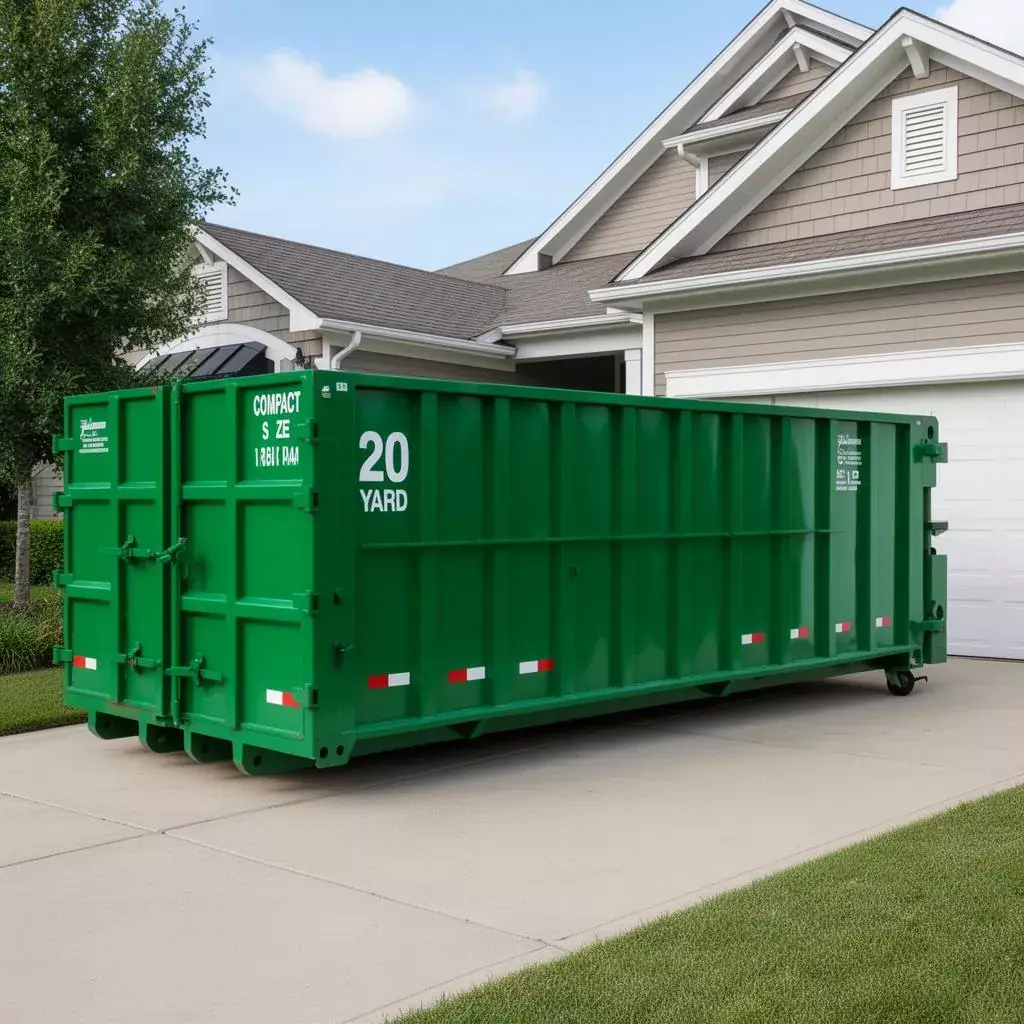
How do the five dumpster sizes compare?
The five roll-off sizes run from 10 to 40 cubic yards, with 2 to 6 tons included. The 10-yard is 12 ft long and holds about 3 to 5 pickup loads. The 30-yard is 22 ft long and holds about 10 to 15. The 20-yard and 30-yard share the same 22 × 8 ft footprint.
| Size | Outside size (L × W × H) | Tons included | About how many pickup loads | Often a fit for |
|---|---|---|---|---|
| 10-yard | 12 ft × 8 ft × 3.5 ft | 2 tons | About 3 to 5 | Garage or single-room cleanouts, a small bathroom, concrete or dirt loaded halfway |
| 15-yard | 16 ft × 7.5 ft × 4.5 ft | 2.5 tons | About 5 to 7 | A one-room remodel, a larger garage cleanout, heavy debris loaded halfway |
| 20-yard | 22 ft × 8 ft × 4 ft | 3 tons | About 7 to 10 | Many single-layer roof tear-offs, a kitchen remodel, a floor-by-floor cleanout |
| 30-yard | 22 ft × 8 ft × 6 ft | 4 tons | About 10 to 15 | Whole-house cleanouts, large remodels, bulky light debris like furniture and framing |
Pickup loads assume an 8-ft pickup bed loaded level, which holds about 2 to 3 cubic yards. Your truck and how high you stack will change the count. Every size includes a 7-day rental.
A "yard" means one cubic yard of space: a box 3 ft wide, 3 ft long and 3 ft tall. A 20-yard dumpster holds 20 of those boxes.
Have a question about your job? Get the size, included tons and flat rate in one call.
Call now (281) 673-4344What size dumpster do I need for my project?
A 20-yard dumpster is a common starting size for a kitchen remodel or a single-layer roof tear-off. Garage cleanouts often start with a 10- or 15-yard. Whole-house cleanouts often need a 30-yard. Heavy debris is the exception: concrete, dirt, brick and sand go only in the 10- or 15-yard.
| Project | Common starting size | What to check first |
|---|---|---|
| One-car garage or single-room cleanout | 10-yard | Count your pickup loads; about 3 to 5 fit |
| Two-car garage or attic cleanout | 15-yard | Bulky furniture takes more room than boxes |
| Bathroom remodel | 10-yard | Tile and mortar are heavy; watch the 2-ton limit |
| Kitchen remodel | 20-yard | Cabinets and drywall are bulky but fairly light |
| Roof tear-off, one layer | 15- or 20-yard | Squares × bundle weight (see the math below) |
| Whole-house or estate cleanout | 30-yard | A second rental may be needed for large homes |
| Concrete, dirt, brick or sand | 10- or 15-yard only | Load no higher than halfway up the walls |
Roof math by included tons
Check the weight printed on your shingle bundle wrapper. If your bundles weigh 70 lb and a square takes 3 bundles, one square of one layer is 210 lb. At that weight, the included tons cover about 19 squares in a 10-yard, 23 in a 15-yard, 28 in a 20-yard and 38 in a 30-yard. A second layer doubles the weight per square. See the roofing dumpster page for tear-off planning.
Concrete math by included tons
Normal-weight concrete weighs about 150 lb per cubic foot. A 4-inch slab is about 50 lb per square foot. The 2 tons in a 10-yard cover about 80 square feet of that slab. The 2.5 tons in a 15-yard cover about 100 square feet. Weight past that is billed as overage.
What does picking the wrong dumpster size cost?
A dumpster that is too small costs a second full rental, because a swap is billed as a new standard rental at your quoted flat rate. A dumpster that is too big costs the price difference for space you never use. A load that is too heavy costs $75 per ton over your included weight.
- Too small: When debris reaches the top rim and the job isn't done, you need a swap. A swap is a new 7-day rental, so you pay your quoted flat rate again.
- Overfilled instead of swapped: A load above the top rim can't legally be hauled. The $125 dry-run fee applies, and you remove the excess before pickup.
- Too big: You pay for empty space. A bigger dumpster also has taller walls, which makes tossing debris over the side harder.
- Too heavy: Overage is $75 per ton, billed to the exact pound from the landfill scale ticket. Read how dumpster weight is billed before you load heavy materials.
Should I round up or down when I'm between two dumpster sizes?
Round up one dumpster size when your debris is light and bulky, like furniture, drywall, cabinets or boxes. A swap is a full new rental, so running out of room costs more than extra space. Do not round up for heavy debris: weight, not space, sets the limit for concrete, dirt and brick.
When you call, ask for the flat rate on both sizes you are weighing. Compare the step up with the cost of a second rental of the smaller size. That one comparison usually settles it.
For mixed jobs, keep heavy debris separate. A clean, unmixed load of concrete or dirt in a 10- or 15-yard qualifies for clean-fill pricing. Light debris can then go in its own larger dumpster. The concrete and dirt dumpster page covers heavy loads.
Is a 20-yard or a 30-yard dumpster better for my driveway?
The 20-yard and 30-yard dumpsters both measure 22 ft long by 8 ft wide, so both need the same driveway space. The 30-yard is 6 ft tall instead of 4 ft and includes 4 tons instead of 3. Pick the 30-yard for bulky light debris and the 20-yard when walls must stay low for loading.
The 10-yard is the shortest at 12 ft long, and the 15-yard is 16 ft long and 7.5 ft wide. Our drivers set wooden boards under the rails to protect concrete and asphalt. For space and clearance needs, read dumpster placement on a driveway.